
Generating 279 marketing hypotheses and ship-ready, on-brand, compliant assets in under 60 minutes
How To Build An AI-Native Growth System So That Ideas Can Move From Strategy To Shippable Campaigns In Hours Instead Of Weeks



Overview
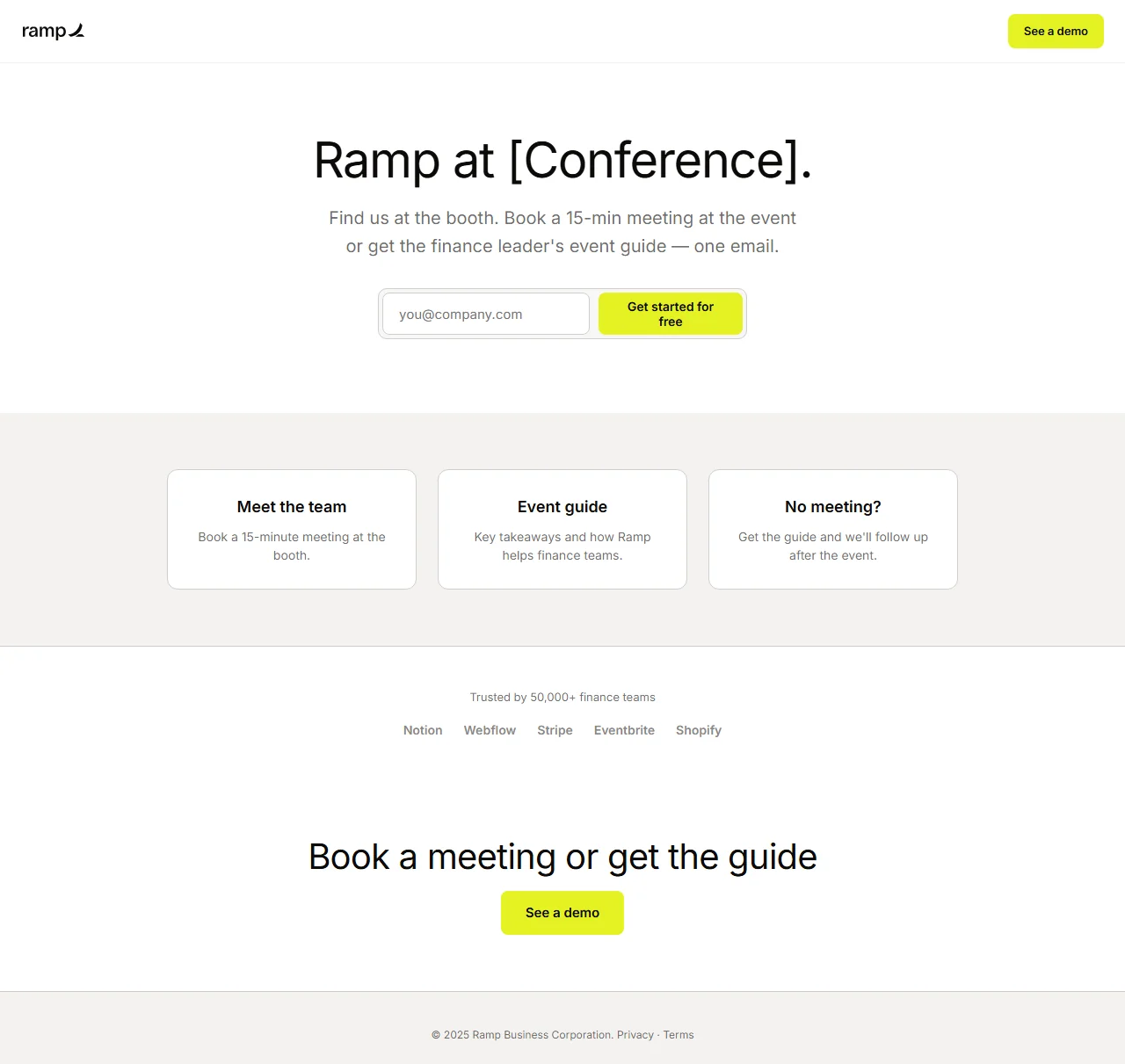
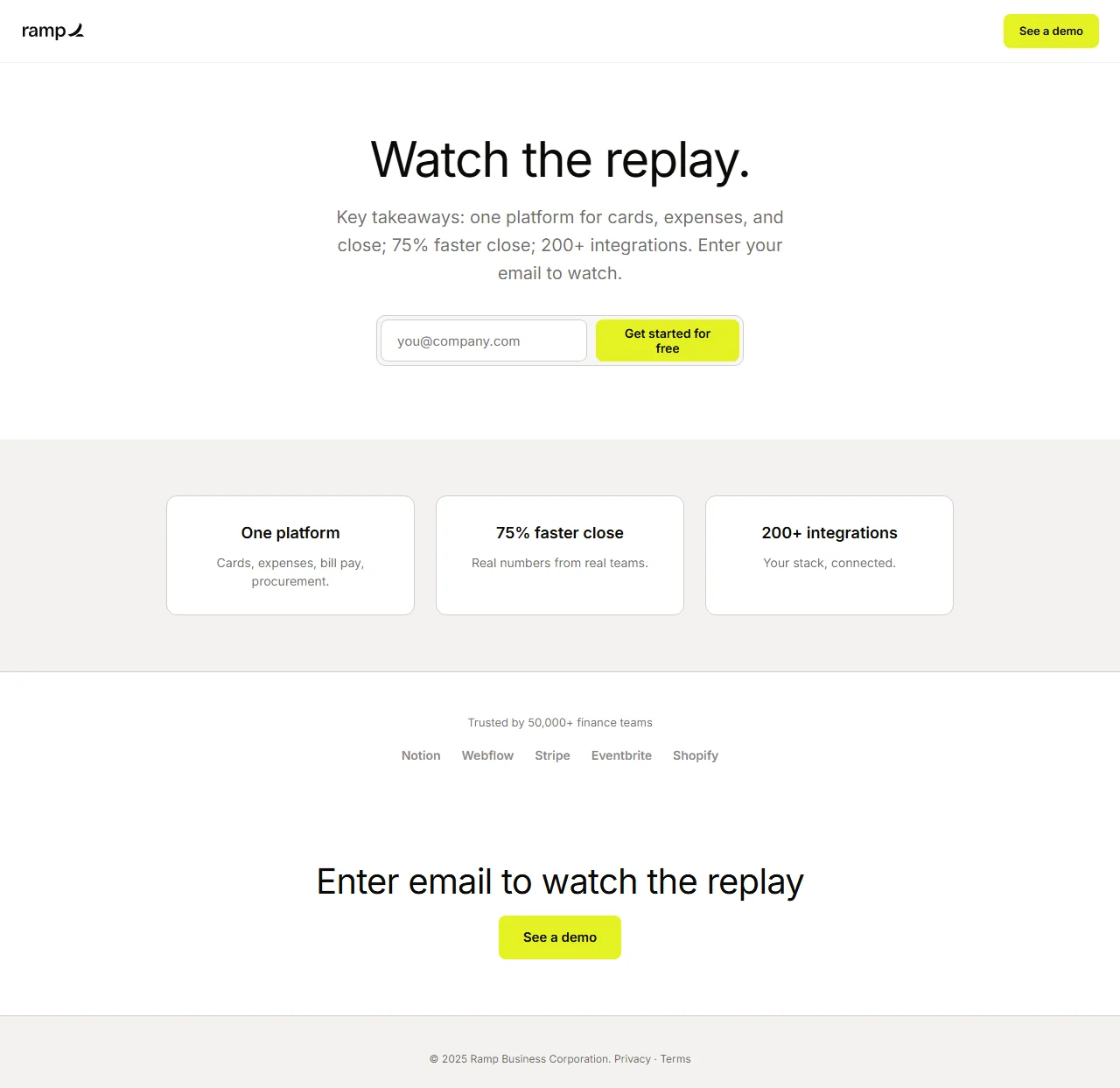
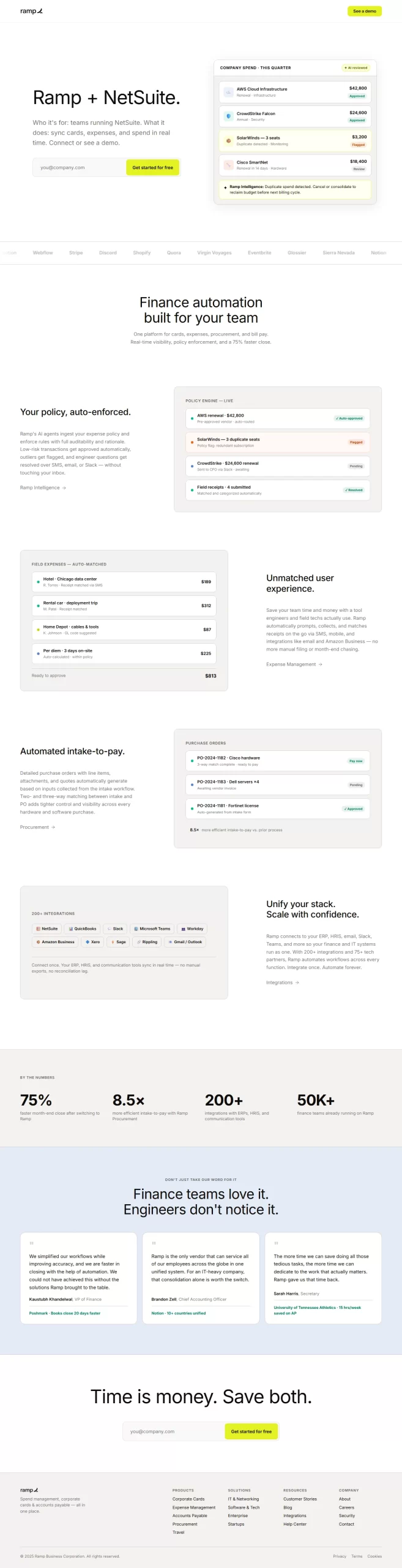
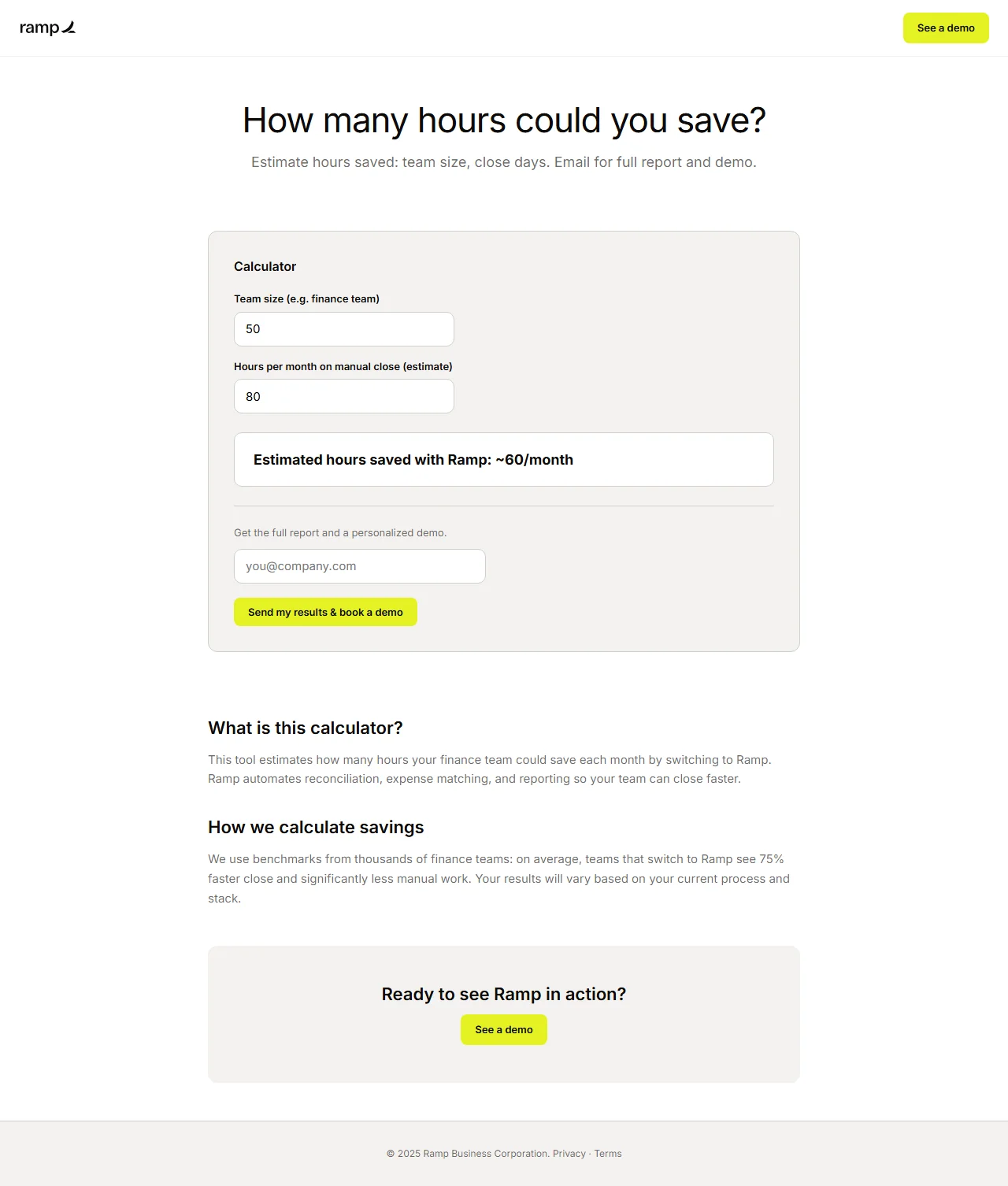
Generated 279 shippable prototypes, each paired with a hypothesis to guide channel activation.
The outputs covered every major marketing channel, and the system continuously ingests new data to produce challenger assets for ongoing iteration.
Most importantly, this type of native AI workflow will likely be accessible to you and your competitors within a year.
Most organizations adopt AI through tools. They generate copy, create ads, draft landing pages, and accelerate production. Output volume increases, but performance often does not improve at the same rate.
The constraint is not content generation. The constraint is system design.
AI performs best when it operates inside a structured environment with:
- clear strategy
- controlled brand inputs
- operational data
- defined execution processes
- feedback loops
When those elements are in place, AI becomes an execution engine for growth rather than a generic content generator.
The model below shows how marketing organizations can structure AI as part of a repeatable growth system.
Seven components that turn AI into an execution engine
System Architecture
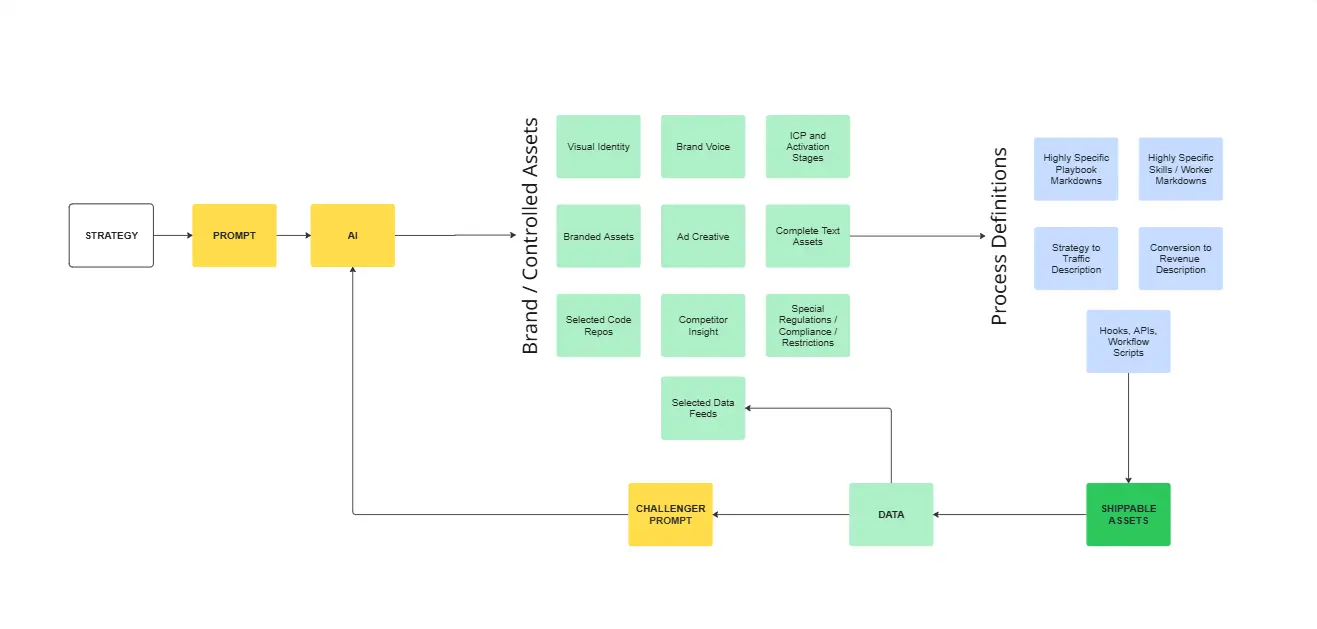
Strategy to Prompt to AI
Every execution cycle starts with strategy.
Strategy defines the operating constraints: Ideal Customer Profile (ICP), positioning and value narrative, acquisition channel strategy, campaign objectives, and success metrics.
This strategic context is translated into a prompt structure. The prompt acts tells the AI system what to build, what inputs to reference, and what process to follow.
In this model, prompts are not ad-hoc questions. They are structured execution triggers that initiate marketing production.
1
Brand and Controlled Assets
AI must operate inside brand constraints.
Without guardrails, generated assets drift toward generic messaging and inconsistent design. Brand-controlled inputs provide the necessary boundaries.
- visual identity systems
- brand voice documentation
- existing creative assets
- ad creative libraries
- messaging and copy libraries
- structured content repositories
These assets allow AI to generate materials that remain aligned with brand standards while still producing new variations. You can think of this as the creative operating system for the AI workflow.
2
Operational Inputs and Data Sources
Marketing assets must function inside real operating environments.
That requires access to internal data and operational context. Important inputs include:
- ICP definitions
- customer lifecycle or activation stages
- internal data feeds
- product usage signals
- workflow scripts
- API integrations
- selected code repositories
- regulatory and compliance constraints
With these inputs, AI can produce outputs that integrate directly with marketing automation systems, ad platforms, CRM environments, product workflows, and analytics pipelines. Without this operational context, AI outputs remain conceptual rather than deployable.
3
Process Definitions
Marketing organizations run on playbooks.
Those playbooks must be translated into structured instructions that AI systems can follow. Process definitions capture how work actually happens inside the company.
- channel-specific growth playbooks
- lifecycle campaign frameworks
- landing page assembly structures
- segmentation and targeting logic
- campaign measurement frameworks
- traffic acquisition workflows
- conversion-to-revenue models
These definitions convert institutional marketing knowledge into machine-readable execution logic. Once documented, AI can run these workflows repeatedly and at scale.
4
Shippable Assets
When strategy, brand inputs, operational data, and process definitions are connected, AI can produce deployable marketing assets.
- landing pages
- ad creative sets
- paid media campaign structures
- lifecycle messaging sequences
- audience segmentation rules
- targeting configurations
- reporting dashboards
- analytics summaries
These outputs are designed to be production-ready or close to production-ready. The result is a major reduction in the time between idea, execution, and market testing.
5
Data and Performance Signals
Once assets are deployed, performance data flows back into the system.
Important signals include: traffic acquisition metrics, engagement behavior, conversion rates, funnel progression, and revenue attribution.
This data informs the next round of decisions and experiments. Instead of analyzing campaigns in isolation, the system captures feedback across every marketing test.
6
Challenger Prompts and Iteration
The final component introduces structured experimentation.
Performance signals trigger challenger prompts that push the system to improve existing work. Examples include:
- generating alternative messaging angles
- producing new creative variations
- testing additional ICP segments
- exploring new distribution channels
- restructuring campaign architectures
- optimizing funnel progression
This creates a continuous improvement cycle: generate ideas, deploy assets, collect data, challenge assumptions, iterate rapidly. The result is a marketing system capable of high-velocity experimentation.
7
Operating Model Implication
AI does not replace marketing teams. It changes where leverage exists.
High-performing organizations focus less on producing individual assets and more on building the systems that generate those assets repeatedly.
The advantage shifts to teams that can:
- structure inputs
- codify execution processes
- connect operational data
- design rapid experimentation cycles
In this model, AI becomes part of the marketing operating system.
The companies that win will not be those using the most AI tools. They will be the ones that design the best execution systems around AI.









AI Native Marketing Leader with 11 years driving revenue growth across SEO, paid media, content, and integrated digital campaigns.